
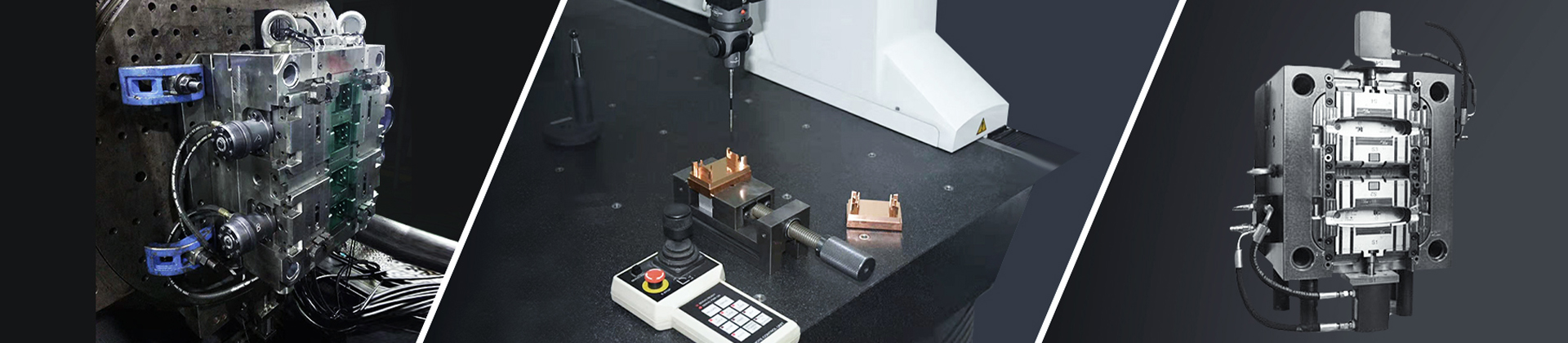
The global vacuum casting market, driven by silicone mold technology, is set to grow from USD 2.73B (2025) to USD 4.57B by 2033 (CAGR 6.67%). For production runs of 20–300 parts, a silicone mold offers 30‑50% lower tooling cost than rigid vacuum forming molds, with lead times of just 5‑10 days for silicone mold making. This article explains how the vacuum forming process with a silicone mold delivers precision, speed, and design freedom—and when to choose it over aluminum or steel vacuum forming molds.
1. Master Model – Foundation for Every Silicone Mold
A master pattern (3D‑printed ±0.1mm or CNC‑machined) determines final part quality. Surface finish < Ra 1.6μm prevents texture defects in the silicone mold. Unlike rigid vacuum forming molds, a silicone mold can replicate undercuts without draft angles, thanks to its elasticity.
2. Silicone Mold Making – From Master to Flexible Tool
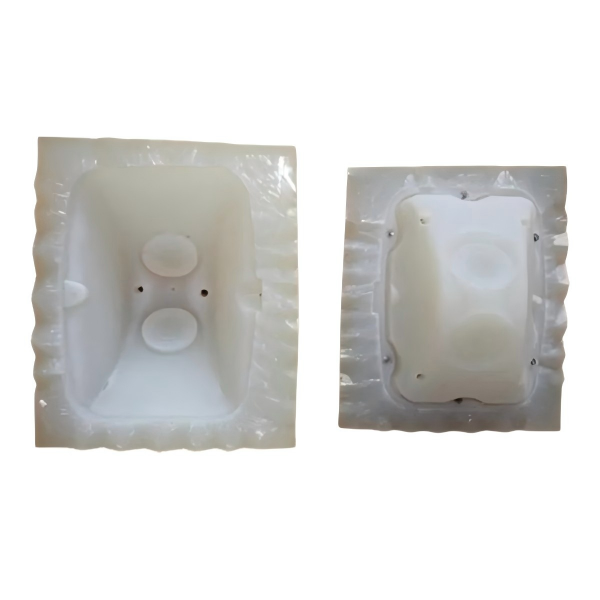
Silicone mold making involves casting platinum‑cured LSR (Shore A 20–60) around the master, degassed and cured at 60°C for 4h. A single silicone mold costs USD 500–3,000 vs. USD 5,000–50,000 for steel vacuum forming molds. The cured silicone mold withstands up to 200°C and yields 50‑100 parts per tool. This silicone mold elasticity also compensates for plastic shrinkage, holding dimensional accuracy of ±0.3mm—critical for subsequent silicone injection molding bridge tooling.
3. Vacuum Forming Process – Forming with a Silicone Mold
In the vacuum forming process, thermoplastic sheets (ABS, PC, PETG, 0.5–5mm thick) are heated to 140‑180°C, then drawn by vacuum (90‑95kPa) against the silicone mold. The silicone mold captures fine textures and deep draws impossible with rigid vacuum forming molds. Cooling takes 30‑120s; the silicone mold’s low thermal conductivity (0.2W/m·K) ensures even solidification, reducing warpage. This vacuum forming process with a silicone mold achieves cycle times under 5 minutes per part, ideal for rapid prototyping.
4. Demolding & Finishing – Leveraging Silicone Mold Flexibility
Thanks to the silicone mold’s flexibility, demolding is manual or with low‑pressure ejectors (0.5‑1 bar), avoiding part fractures. Trimming with CNC routers removes flash. Parts from the silicone mold can be painted or coated, serving as functional prototypes or low‑volume production units. This silicone mold method also supports hybrid multi‑material designs (Shore A 20/80 zones) for complex geometries.
5. Silicone Mold vs. Rigid Vacuum Forming Molds – Data Comparison
| Feature | Silicone Mold | Rigid (Aluminum/Steel) Vacuum Forming Molds |
|---|---|---|
| Tooling Cost | 30‑50% lower for small runs | High initial investment |
| Detail Capture | Excellent for textures | Depends on machining |
| Undercut Handling | Ideal (no draft required) | Limited (needs 3‑5° draft) |
| Production Volume | 50‑100 parts per silicone mold | 1,000+ parts |
| Lead Time | 5‑10 days for silicone mold making | 4‑8 weeks |
| Iteration Cost | Low (recast silicone mold) | High (re‑machine metal) |
6. Applications & Decision Framework
Silicone mold vacuum forming serves automotive, aerospace, medical, and consumer electronics for prototypes and small batches. Use a silicone mold when:
Volume ≤ 100 parts
Design iterations are expected
Complex undercuts or fine textures are required
For volumes > 300 parts, rigid vacuum forming molds become more cost‑effective per part. The silicone mold also acts as a bridge to silicone injection molding—parts from the vacuum forming process can become masters for production tools.
7. Innovations in Silicone Mold Technology
AI‑driven simulations now predict silicone mold wear, scheduling maintenance proactively. Hybrid silicone mold designs combine flexible and rigid zones. VARTM integrates silicone mold with vacuum infusion for aerospace composites—expanding the vacuum forming process into advanced materials. These advancements ensure silicone mold remains indispensable for agile manufacturing.
Conclusion – The silicone mold offers unmatched flexibility and cost efficiency for low‑volume production. By mastering silicone mold making and the vacuum forming process, manufacturers achieve precision parts faster and cheaper than with rigid vacuum forming molds. Whether for prototypes or pilot runs, silicone mold technology delivers measurable ROI—and often serves as the first step toward silicone injection molding at scale.
Consult with Longterm Mold
Tel: +86 156 0239 2025
Email: longterm@longterm-mold.com
Website: www.longterm-mold.com
