
In the fast-paced world of product development, the bridge between a brilliant idea and a flawless final product is built on meticulous planning. For components requiring molded plastics, this foundation is Plastic Mold Engineering Design. This discipline is not a single step but a comprehensive partnership, guiding projects from initial concept through to full-scale production. Our systematic four-stage methodology integrates critical expertise to ensure every part is optimally designed for both performance and manufacture.
Stage 1: Laying the Groundwork with Analysis
Every successful project begins with clarity. Our initial phase is dedicated to a deep dive into project requirements and feasibility. This is where core engineering design principles are first applied to understand mechanical loads, environmental factors, and industry-specific standards. We collaborate closely with clients to define every detail, from tolerances to surface finish. Crucially, we initiate early mould DFM design reviews during this stage, identifying potential production hurdles before the first sketch is made. This proactive analysis sets the stage for seamless integration of subsequent 3D mold design and tooling design considerations, aligning all teams from the outset.
Stage 2: Strategic Material and Process Selection
The choice of material and manufacturing technology fundamentally impacts cost, durability, and function. In this strategic phase, engineering design consultation is paramount. We evaluate polymers and composites based on the part's role, balancing performance with budget. Concurrently, we assess technologies like CNC machining or injection molding, making recommendations that directly inform the upcoming 3D mold design. For instance, selecting a high-grade steel for the tooling design is a decision made here, ensuring the mold's longevity. This stage is a fusion of science and strategy, always filtered through the lens of mould DFM design to guarantee economic viability.
Stage 3: Digital Realization and Simulation
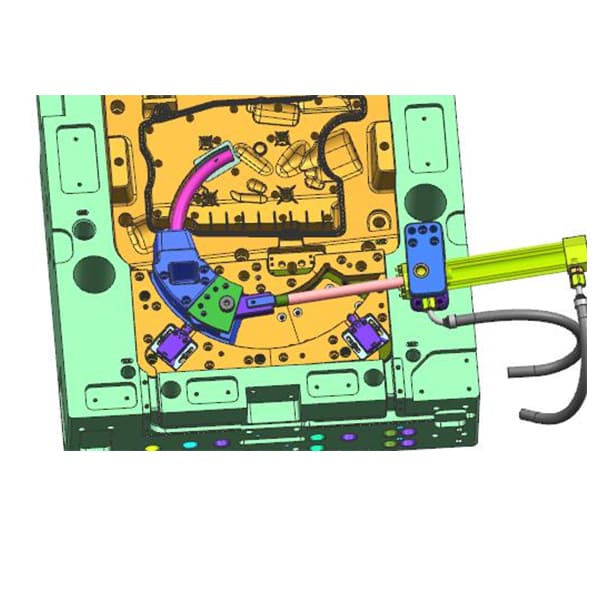
Here, concepts transform into precise digital blueprints. Using advanced CAD software, our engineers create detailed parametric models and 2D drawings. This is the core of the 3D mold design process, where elements like cooling channels, ejector pins, and parting surfaces are defined within the part geometry. Every aspect is developed with the final tooling design in mind. We then employ sophisticated simulations—mold flow analysis, stress testing—to validate the design. This virtual prototyping is an essential engineering design step, allowing us to refine the 3D mold design and incorporate mould DFM design feedback to perfect wall thicknesses and structural details before any metal is cut.
Stage 4: Prototyping for Perfection
The final stage brings the design into the physical world. We produce functional prototypes using methods like CNC machining or 3D printing, which themselves require careful tooling design for soft molds or fixtures. These prototypes are tested rigorously for fit, form, and function. This hands-on phase provides invaluable feedback, offering a final check on the 3D mold design and revealing practical insights for the production tooling design. Any finding is looped back into the mould DFM design, ensuring that every detail, from ejection to finish, is optimized before committing to high-cost production tooling.
From the initial engineering design analysis to the final validation of the plastic injection mold design, our integrated four-stage process embeds expertise at every turn. By weaving 3D mold design, tooling design, and mould DFM design principles throughout the journey, we de-risk development, accelerate time-to-market, and deliver components engineered for manufacturing excellence and commercial success.
