
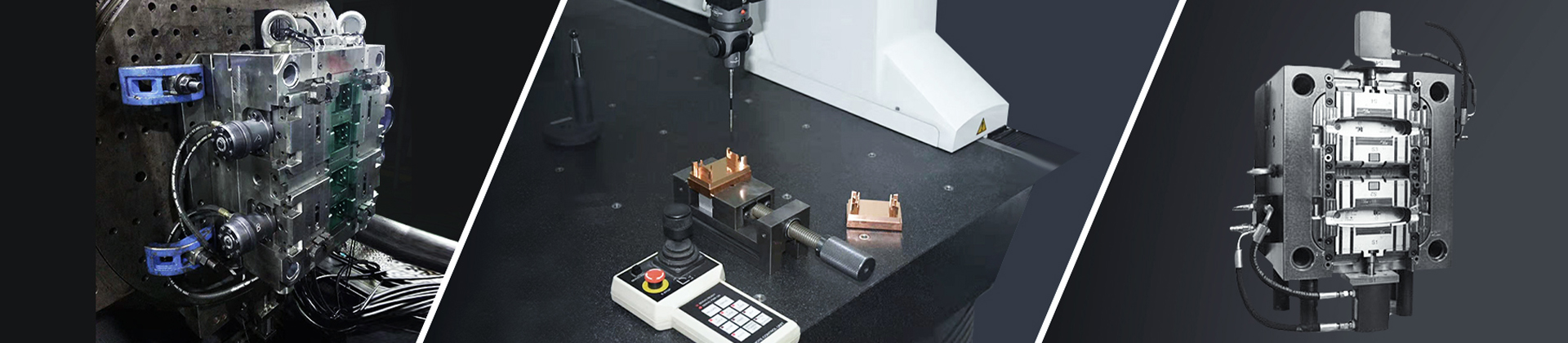
Engineers and product managers face a critical choice when developing functional prototypes: subtractive cnc prototyping or additive manufacturing. While 3D printing excels at organic shapes, cnc machining rapid prototyping delivers tighter tolerances, superior surface finishes, and real material properties. This article provides quantitative comparisons and selection guidelines – helping you decide when to specify a cnc prototype service and when to produce CNC machining prototype parts for validation.
Surface Finish & Tolerance: Where rapid prototyping cnc machining Wins
Surface roughness directly impacts assembly fit, friction, and sealing. For functional tests, cnc machining rapid prototyping achieves Ra 1.6–3.2 µm as standard, polishable to Ra 0.8 µm. In contrast, raw 3D prints (FDM/SLA) typically deliver Ra 6.3–12.5 µm – requiring secondary sanding or chemical smoothing that alters critical dimensions.
CNC prototyping tolerance: ±0.01 mm (e.g., a 50 mm shaft fits a 49.98 mm bore without binding).
Additive tolerance: ±0.2–0.5 mm for desktop printers; industrial SLS reduces to ±0.1 mm but still double that of rapid prototyping cnc machining.
When you need CNC machining prototype parts for bearing housings, gear meshes, or pneumatic fittings, cnc prototyping is the only reliable method. A cnc prototype service can document every measured dimension on a CMM report – impossible with layer-by-layer processes due to anisotropic shrinkage.
Material State & Properties: Subtractive vs. Additive
The fundamental difference: cnc machining rapid prototyping starts with solid wrought or cast stock (e.g., 6061-T6 aluminum, PEEK, 316L stainless) and removes material. The resulting CNC machining prototype parts retain the original’s grain structure, density, and mechanical data:
Yield strength: 6061-T6 aluminum → 276 MPa (same as production bar stock).
3D printed metal (DMLS) typically achieves 90–95% of wrought strength, requiring HIP heat treatment to close micro-porosity.
For load-bearing prototypes (suspension arms, surgical tools), rapid prototyping cnc machining eliminates the risk of void-induced failures. A reliable cnc prototype service will also provide material certificates (EN 10204 3.1) – essential for aerospace and medical device validation.
Production Speed & Scalability – Data for Decision Makers
Many assume additive is always faster. Wrong. For simple prismatic parts (brackets, enclosures, manifolds), cnc machining rapid prototyping produces 1–10 units within 24 hours. A 3-axis mill running at 12,000 RPM can rough and finish an aluminum block in 90 minutes. Meanwhile, a 3D printer may need 8–12 hours for the same part, plus post-processing.
cnc prototyping also scales economically from single prototypes to batches of 100–500 units. Once the CAM program is validated, producing additional CNC machining prototype parts only adds machine time – no new tooling cost. In contrast, 3D printing’s per-part time remains constant, making it less competitive for batches above 50 units (unless geometry is ultra-complex).
| Quantity | Recommended process | Lead time (first part) | Cost per part (indexed) |
|---|---|---|---|
| 1–5 simple parts | cnc machining rapid prototyping | 1–2 days | Low |
| 1–5 complex lattices | Additive | 2–4 days | Moderate |
| 10–200 units | cnc prototyping (machined) | 2–5 days | Low to moderate |
| 10–200 units (organic) | Additive + machining | 5–7 days | High |
When using a cnc prototype service, ask about their 5‑axis capability. 5‑axis rapid prototyping cnc machining eliminates multiple setups, reducing lead time by 40% for undercut features (e.g., turbine blades, prosthetic knee joints).
Why CNC machining prototype parts Dominate Functional Testing
Functional prototypes must survive real-world forces, temperatures, and chemical exposure. CNC machining prototype parts made from PEEK (operating up to 250°C) or 316L (marine corrosion resistant) behave identically to production units. You can torque a machined M6 threaded hole to 8 Nm – a printed plastic thread will strip at 2 Nm.
cnc prototyping also supports hybrid workflows: machine a metal base plate, then add 3D-printed lattice inserts. This combines rigidity and weight reduction. A professional cnc prototype service will advise on such mixed methods.
Selecting a cnc prototype service – Five Technical Criteria
To avoid delays and rework, evaluate providers against these metrics:
Machine park – Minimum 3‑axis, preferred 5‑axis for complex cnc machining rapid prototyping.
Tolerance guarantee – Stated ±0.01 mm or better, verified by on‑machine probing or CMM.
Material range – At least aluminum (6061/7075), stainless (304/316L), engineering plastics (POM, PEEK, PC).
Surface finish options – As‑machined (Ra 1.6), bead blast, anodize, or electropolish for CNC machining prototype parts.
Lead time commitment – 24‑hour rush for simple cnc prototyping; 3‑5 days for multi‑axis parts.
Ask potential suppliers: “What is your typical delivery variance for rapid prototyping cnc machining orders?” Reliable shops keep ±1 day for orders under 50 pieces.
Real‑World Data: Automotive & Medical Cases
Automotive ECU housing: A Tier‑1 supplier switched from SLA printing to cnc machining rapid prototyping. Heat deflection temperature rose from 58°C to 120°C (PC material). Vibration testing passed 10 Grms without cracking. CNC machining prototype parts also allowed integrated brass heat-set inserts – impossible with pure additive.
Surgical drill guide: Stainless 17‑4 PH via cnc prototyping achieved 41 HRC hardness, surviving 50 sterilization cycles. The same geometry printed in metal required 6 hours of post‑machining to clean support interfaces – doubling cost.
In both cases, rapid prototyping cnc machining reduced the number of design iterations from 5 to 2, cutting development time by 60%.
Conclusion – When to Specify cnc prototyping
Choose cnc machining rapid prototyping when your prototype must:
Hold ±0.01 mm tolerance on mating features.
Survive mechanical loads >50 MPa.
Use production materials (same alloy, same heat treat).
Scale to 100+ identical pieces without tooling.
Choose additive when your part has internal lattices, complex fluid channels, or you only need visual models.
For mission‑critical CNC machining prototype parts, always partner with a cnc prototype service that publishes its capability matrix. Rapid prototyping cnc machining remains the gold standard for functional validation – because data, not hype, drives manufacturing decisions.
Need technical support or a quote for your next project?
Contact Longterm Mold for project consultation:
Tel: +86 156 0239 2025
Email: longterm@longterm-mold.com
Website: www.longterm-mold.com
Longterm Mold specializes in cnc prototyping, cnc machining rapid prototyping, and low-volume production – from prototype to pilot run.
