
Introduction
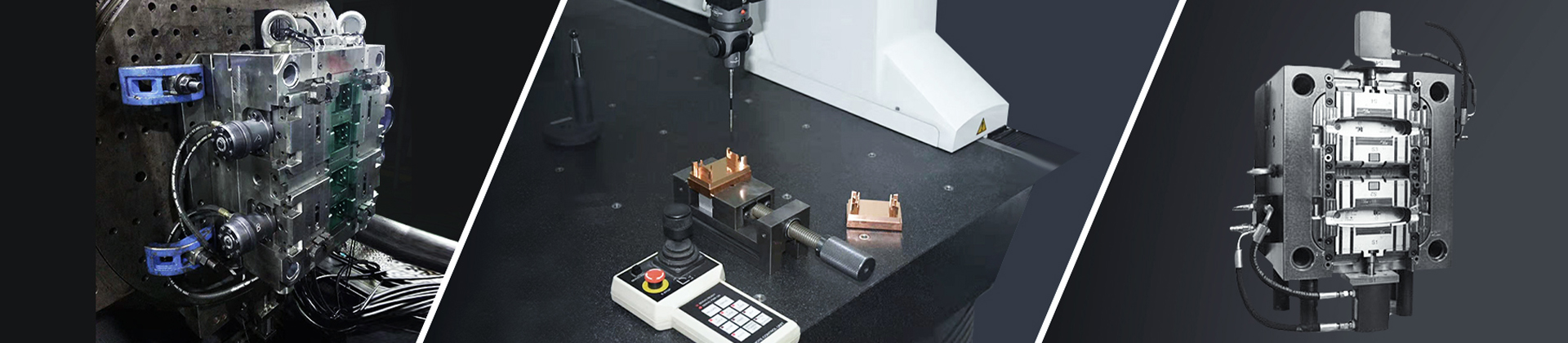
Modern industry relies on five specialized processes—automative parts mold, electronic mould, blowing moulding tools, die casting molds, and medical tooling—to transform raw materials into precision components. With global production volumes exceeding 10 billion units annually, these technologies address critical pain points: cycle time, material performance, and regulatory compliance. Data-driven insights and clear hierarchies guide decision makers toward the optimal tooling solution for each application.
1. Engineering Durable Components: Automotive Molds
Key challenges in automative parts mold production include thermal fatigue, surface finish and cycle life. Leading-edge facilities now deploy:
• H13 tool steel (HRC 50–55) cores for engine brackets, extending mold life by 30% per 1 million cycles.
• Multi-cavity designs (up to 64 cavities) reducing cycle times to 20 seconds per shot.
• Electrochemical machining (ECM) to achieve micro-textures (Ra <0.8 μm) that replicate leather-grain without post-processing.
For OEMs choosing automative parts mold, prioritize tool steel grade and cavity count to balance volume and precision.
2. Micro-Precision Molding: Electronic Solutions
For sub-millimeter features, electronic mould tooling must deliver tolerances within ±0.02 mm. Key parameters:
• Micro-injection molds with 0.1 mm wall thickness in PEEK and LCP to withstand reflow soldering at 260 °C.
• Insert molding integration for single-shot assembly of sensors with embedded PCB traces.
• Cleanroom-rated electronic mould systems (Class 100) using stainless steel 316L with electropolish finishes (Ra <0.1 μm).
Decision point: choose 3D-printed aluminum prototypes to cut lead times from 4 weeks to 5 days on new electronic mould designs.
3. Versatile Hollow Forming: Blowing Technology
blowing moulding tools convert polymers into hollow parts with tight wall tolerances (±0.05 mm). Typical configurations:
• Extrusion Blow Molding (EBM) for HDPE containers using split-cavity designs with uniform air channels.
• Injection Blow Molding (IBM) achieving 3 mm neck diameters and Ra <0.2 μm surface for pharmaceutical compliance.
• Co-extrusion blowing moulding tools layering EVOH barriers to extend shelf life by 25% without extra processing.
Select blowing moulding tools with anti-adhesive coatings when processing rPET recyclate to prevent contamination.
4. High-Volume Metal Forming: Advanced Die Casting
die casting molds must resist extreme temperatures (400–750 °C) and maintain dimensional stability within ±0.03 mm. Options include:
• Hot-chamber molds for zinc alloys operating at 420 °C, versus cold-chamber aluminum tools at 720 °C with nitrogen quenching.
• Vacuum die casting molds reducing porosity by 60%, boosting tensile strength to 350 MPa.
• Overmolding dies that integrate plastic onto aluminum e-bike brackets, reducing part count by 1 and weight by 30%.
When selecting die casting molds, balance alloy choice and cooling channel design to optimize throughput and quality.
5. Sterile Precision: Cutting-Edge Medical Tooling
medical tooling demands biocompatibility, traceability and ISO 13485 certification. Critical features:
• Electropolished 316L steel surfaces with Ra <0.1 μm to prevent bacterial adhesion in syringe barrels.
• Two-shot molds combining elastomeric seals and polycarbonate housings for leak-tight insulin pens.
• 3D-printed DMLS prototypes that reduce tooling costs by 60% on low-volume medical tooling runs.
For compliance-driven buyers, ensure RFID-enabled tooling to track every cycle under FDA 21 CFR Part 820.
6. Cross-Industry Innovation Driving the Future
• Digital twin simulations of automative parts mold and die casting molds cut design iterations by 40%.
• AI-powered controls optimize electronic mould parameters in real time, lowering scrap rates from 5% to <1%.
• Biodegradable release agents and water-based coolants in blowing moulding tools improve sustainability metrics by 15%.
• Collaborative robots automate insert loading in medical tooling, enhancing throughput by 22%.
Conclusion
As sectors embrace electrification and sustainability, automative parts mold, electronic mould, blowing moulding tools, die casting molds, and medical tooling will evolve toward higher precision and lower environmental impact. Manufacturers should prioritize material selection, cycle-time data and regulatory features when choosing between mold types. By integrating smart technologies and advanced materials, production leaders can transform design challenges into efficient, compliant processes—one precision tool at a time.
Contact for Inquiries
Longterm Manufacturing Solutions Ltd.
Tel: +86 156 0239 2025
Email: longterm@longterm-mold.com
Website: www.longterm-mold.com
