
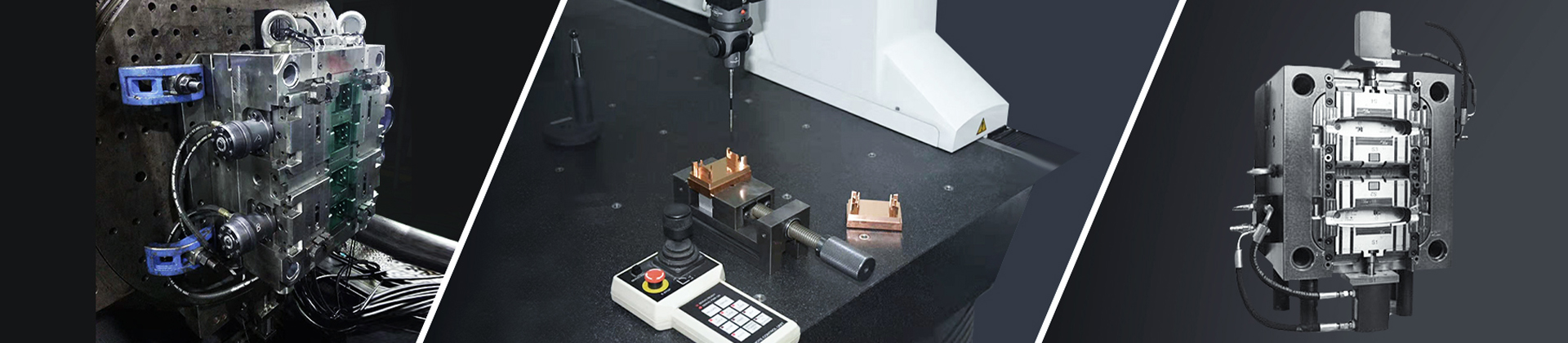
Introduction
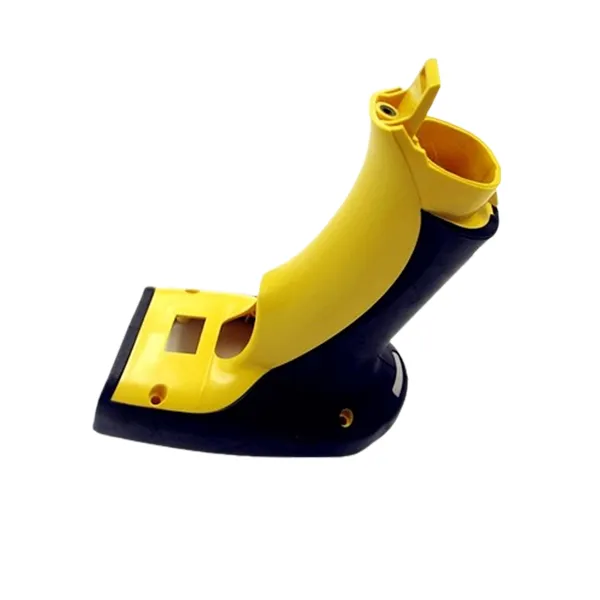
2K Molds technology—including bi injection mold, double injection mold, two shots molds, 2k mold tooling, and rotation bi-injection mold—solves the common pain points of secondary assembly, misalignment, and material incompatibility. With our mold engineers’ 15+ years of experience and a 99.8% first-pass yield rate, Longterm Mold delivers reliable multi-material solutions that reduce cycle time by 20% and ensure bond integrity under 150 MPa injection pressure.
1. Overview of Two-Shot Molds and Bi Injection Mold Systems
- Two shots molds enable two distinct materials or colors in a single cycle—eliminating post-assembly.
- Bi injection mold and double injection mold processes require precise core/cavity matching to prevent flash and bond failure.
- Rotation bi-injection mold designs employ a 180° platen rotation with ±0.01 mm guide-pin tolerance for seamless overmolding.
- 2k mold tooling integrates hot runner systems (ΔT ≤±5 °C) to maintain melt consistency throughout both shots.
2. Core Technical Specifications for 2k Mold Tooling
Mold Cavity/Core Configuration
• Two female cavities with unique geometries plus two identical male cores—ensuring part uniformity across bi injection mold runs.
• Core precision within ±0.02 mm avoids misalignment in double injection mold components.
Rotation and Alignment Protocol
• 180° central rotation system for rotation bi-injection mold halves.
• Locator blocks with tolerance ±0.01 mm guarantee exact repositioning.
• Interlock response time ≤0.3 s prevents part crushing and syncs with 15–30 s cycle times.
Thickness and Installation Parameters
• Front panel + A-board thickness ≥170 mm to resist 100–150 MPa injection pressure.
• KO hole spacing at standard 200 mm×200 mm for ejector alignment.
• Platen size matching to avoid stress concentrations in two shots molds.
Nozzle & Cooling Design
• Self-releasing nozzle for automatic sprue separation—cutting cycle time by 15%.
• Water-based cooling channels with ≥10 L/min flow per cavity—ΔT ≤3 °C for balanced cooling.
• Conformal cooling reduces warpage in 2k mold tooling.
3. Flow Dynamics and Material Sequence Strategy
• First shot: hard plastics (PC at 280–300 °C; POM at 260–280 °C).
• Second shot: TPE or silicone at 180–200 °C.
• Injection speed ramp-up from 50% to 100% over 0.5 s mitigates flow impact on the first shot.
• Deflector ribs in the second cavity protect overmolded interfaces in rotation bi-injection mold setups.
4. Key Avoidance and Validation Features
• Clearance features in second-injection master mold prevent bond damage.
• FEA analysis verifies plastic deformation thresholds ≥80 MPa and crack propagation limits under double injection mold pressures.
• Dimensional compensation: 0.1–0.3 mm oversize on first-shot parts, optimized via mold flow simulation—ensuring hermetic seals.
5. Choosing the Right 2K Mold Solution
Decision Criteria Checklist:
1. Tolerance Requirements: core/cavity match ≤±0.02 mm
2. Cycle Time Targets: rotation bi-injection mold interlock ≤0.3 s
3. Cooling Balance: ΔT ≤3 °C, ≥10 L/min flow
4. Material Compatibility: hard/soft sequence control
5. Automated Demolding: self-releasing nozzle for two shots molds
Our engineers achieve an average 98.5% first-pass success rate on bi injection mold and double injection mold projects by adhering to this checklist. 2k mold tooling from Longterm Mold delivers robust, cost-effective production runs in volumes from 10,000 to 1 million+ parts.
Conclusion
For advanced multi-material injection molding—whether bi injection mold, double injection mold, two shots molds, 2k mold tooling, or rotation bi-injection mold—Longterm Mold combines data-driven design, rigorous FEA validation, and precision manufacturing. Partner with us to streamline your workflow, eliminate secondary assembly, and meet the strictest tolerance and cycle-time demands.
Contact Longterm Mold for inquiries and project quotes:
Tel: +86 156 0239 2025
Email: longterm@longterm-mold.com
Website: www.longterm-mold.com
