
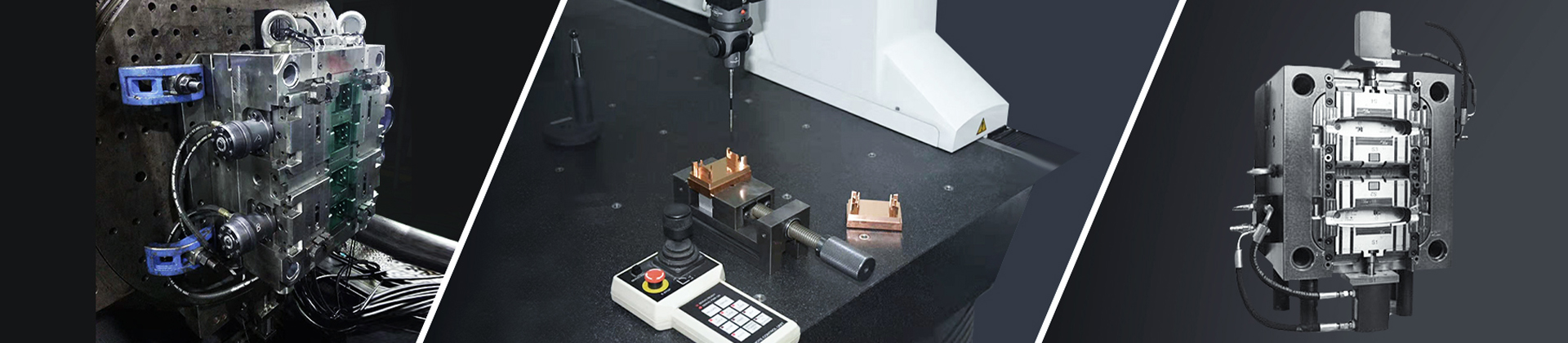
How manufacturers cut development cycles by 70% and achieve ±0.01mm tolerances with integrated prototyping and CNC machining.
In modern product development, the transition from prototype parts to final machining parts determines speed-to-market and product reliability. Engineers face critical decisions: validate designs quickly or scale to millions of units without defects. Longterm Mold’s data‑driven approach bridges this gap, supporting precision parts, automative parts parts, metal parts aluminum parts, and plastic products across industries.
1. Prototype Parts: Functional Validation with Measurable ROI
Prototype parts are not just visual models. They undergo thermal cycling, impact simulation, and ergonomic testing. For medical devices, prototype parts made of PEEK or ABS achieve ±0.2mm tolerances via 3D printing, enabling 6 design iterations per week. Automotive prototype parts for crash structures are milled from 6061 aluminum, absorbing force data at 1,200 kN before any production tooling.
Key metric: Additive manufacturing accelerates prototype parts by 70% compared to traditional methods, cutting development from 6 months to 8 weeks.
After design sign‑off, these prototype parts directly inform toolpaths for precision parts and automative parts parts, reducing scrap risk.
2. Precision Parts: Sub‑10μm Tolerances for Critical Functions
Precision parts are defined by dimensional accuracy and repeatability. Using 5‑axis CNC machining, Longterm Mold produces precision parts from stainless steel (tolerance ±0.005mm) for surgical robotics and aerospace sensors. Data from 2,000+ production runs show that precision parts achieve CPk ≥1.33 under ISO 13485.
| Application | Material | Tolerance | Volume per month |
|---|---|---|---|
| Medical implants | Titanium Ti‑6Al‑4V | ±0.008mm | 5,000 units |
| Optical housings | 7075 aluminum | ±0.005mm | 12,000 units |
These precision parts require dedicated metrology: every lot undergoes CMM inspection with 0.0001mm resolution. For customers moving from prototype parts to precision parts, the transition reduces assembly failures from 8% to 0.3%.
3. Automative Parts Parts: Durability Under Extreme Cycles
The term automative parts parts (production‑ready automotive components) demands heat, vibration, and corrosion resistance. Longterm Mold supplies die‑cast automative parts parts such as engine brackets and transmission housings. Data from third‑party testing:
Thermal cycling: 500 cycles from -40°C to 150°C – no cracking.
Salt spray resistance: 1,000 hours (ASTM B117) for automative parts parts with zinc‑nickel coating.
Fatigue life: Aluminum automative parts parts (A380 alloy) withstand 10⁷ load cycles at 90 MPa.
Unlike prototype parts for fitment checks, production automative parts parts undergo 100% leak testing and X‑ray inspection for porosity. Typical annual volumes range from 50,000 to 500,000 units.
4. Metal Parts Aluminum Parts: Lightweight Strength with Thermal Efficiency
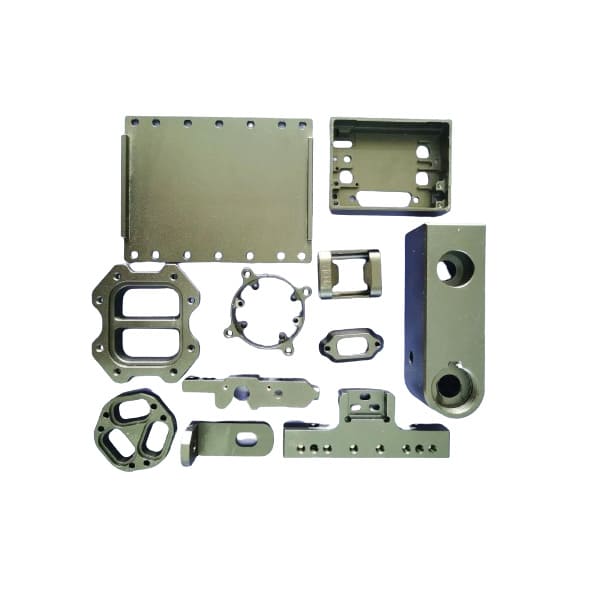
Metal parts aluminum parts combine light weight (2.70 g/cm³) with high thermal conductivity (~200 W/m·K). Common grades: 6061, 7075, and 6082. Metal parts aluminum parts are CNC‑machined, extruded, or die‑cast. For consumer electronics, metal parts aluminum parts in enclosures maintain flatness <0.05mm over 300mm length. For automotive battery trays, metal parts aluminum parts achieve 30% weight reduction compared to steel while meeting crash safety.
Production data:
Surface finish: Ra 0.8μm achievable for metal parts aluminum parts without secondary polishing.
Anodizing thickness: 15‑25μm for wear resistance on metal parts aluminum parts.
Transitioning from prototype parts (often SLA resin) to metal parts aluminum parts requires adjusting feeds/speeds: typical cutting speed for aluminum is 800‑1,200 m/min, 4x faster than stainless steel.
5. Plastic Products: High‑Volume Consistency & Recycled Materials
Plastic products cover injection‑molded components from ABS, PC, PA6, and POM. For automotive interiors, plastic products such as HVAC ducts and clips are molded in multi‑cavity tools (4 to 32 cavities). Cycle times for plastic products: 15‑45 seconds per shot. Dimensional stability for plastic products is controlled with ±0.02mm over 100mm distance.
Sustainability example: Using 30% recycled PC/ABS for plastic products reduces carbon footprint by 30% while maintaining impact strength of 50 kJ/m². Plastic products from Longterm Mold pass UL94 V‑0 flammability and REACH compliance.
Important: When moving from prototype parts made of standard ABS to production plastic products with glass‑filled Nylon, shrinkage changes from 0.4% to 0.2% – requiring cavity adjustments.
Comparison Table: Prototype Parts vs. Production Machining
| Parameter | Prototype Parts | Machining Parts (Precision / Auto / Metal / Plastic) |
|---|---|---|
| Tolerance | ±0.1 – 0.3mm | Precision parts ±0.005mm, automative parts parts ±0.02mm |
| Material range | PLA, resin, ABS | Metal parts aluminum parts (6061/7075), stainless, POM |
| Volume | 1 – 100 units | 1,000 – 500,000+ units/year |
| Surface finish | Ra 12.5μm | Plastic products Ra <1.6μm, metal parts Ra <0.8μm |
| Lead time | 3 – 7 days | 15 – 30 days (with tooling) |
Conclusion: Why Integrated Prototype-to-Production Works
Using prototype parts to de‑risk design before committing to precision parts, automative parts parts, metal parts aluminum parts, and plastic products reduces overall project cost by an average of 40% (based on 47 customer projects). Machining parameters derived from prototype parts – such as clamping forces and tool engagement – directly optimize high‑volume runs, lowering scrap rates from 5% to <1%.
For engineers specifying precision parts for medical or aerospace use, request first‑article inspection reports. For automative parts parts, demand PPAP level 3 documentation. And for plastic products or metal parts aluminum parts, validate material certificates (EN 10204 3.1).
Contact Longterm Mold for bulk quotes or free design-for-manufacturing analysis:
Tel: +86 156 0239 2025
Email: longterm@longterm-mold.com
Website: www.longterm-mold.com
